Logistics
Water, waste, and the gallon-a-day rule
How much water to carry, how to handle gray water and human waste, and the small habits that keep dispersed sites usable for everyone.
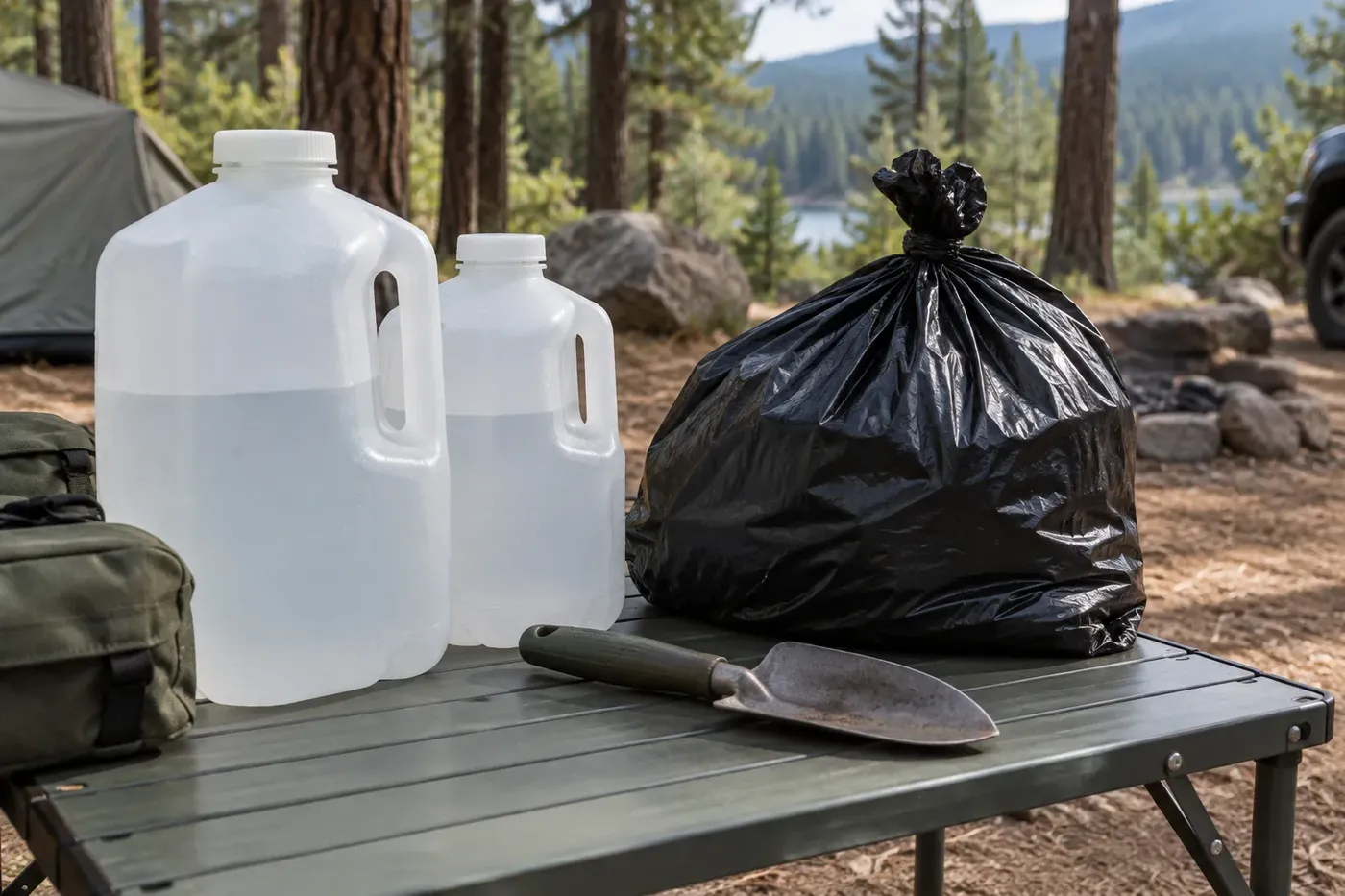
Water
The reliable rule for dispersed camping is one gallon per person per day, with a minimum two-day buffer. That covers drinking, cooking, basic hygiene, and a margin for getting stuck or staying an extra night. In the desert in summer, double it.
Carry water in food-grade containers — collapsible jugs are easy to store, but rigid five- or seven-gallon water cubes are more durable for repeated trips. Plan to filter or chemically treat any surface water you collect, even from clear-looking springs. Giardia is widespread in U.S. surface water and ruins a trip fast.
Gray water
Gray water is everything that drains out of your dishpan, your camp shower, your toothbrush rinse. The Leave No Trace standard is to scatter strained gray water at least 200 feet from any water source, in a spot where it can evaporate quickly. Don't dig a pit; pits concentrate food smells and attract wildlife.
Use biodegradable soap sparingly or skip it entirely — most dishes can be cleaned with a hot rinse and a scraper. Strain solids out of your dishpan and pack them out with your trash; food scraps are bear and rodent attractants and they don't decompose as quickly as people think.
Human waste
On most BLM and USFS dispersed sites, the standard is a 6- to 8-inch cathole at least 200 feet from water, trail, and camp. Cover it with the original soil and disguise it. Pack out toilet paper in a sealed zip bag; in arid climates, buried TP frequently surfaces in the next windstorm.
On heavily used river corridors, alpine zones, and many southwest desert canyons, packing out human waste in a wag-bag or commercial pack-out kit is now required. The math is simple: in a place that sees a thousand visitors a season, even properly buried catholes accumulate to a hygiene and water-quality problem. If you're going to a popular dispersed area, throw a couple of wag-bags in your pack regardless of what the rule says.
Trash
Pack out everything you packed in. That includes orange peels, pistachio shells, and 'biodegradable' food. The high-desert and high-altitude environments where most dispersed camping happens have very slow decomposition cycles; an apple core can sit recognizable for a year. Burning trash is a fire-restriction violation in most years and a microplastic-pollution problem the rest of the time. The best system is a single sealed contractor-grade trash bag inside a rigid container, emptied at home or at the next gas-station dumpster.
Related guides
- What "dispersed camping" actually means — A working definition of dispersed camping on U.S. public lands, how it differs from developed campgrounds, and the unwritten etiquette that keeps it legal.
- BLM vs. USFS vs. state trust land — what actually changes — A side-by-side comparison of the three big public-land managers most dispersed campers will encounter, with the practical rules you need to know.
- Fire rules, fire pans, and the difference between Stage I and Stage II — How seasonal fire restrictions actually work on federal public land, and what each stage means for your camp stove, generator, and campfire.
- How to find a good dispersed pitch you can actually drive to — A practical field protocol for choosing a dispersed campsite from satellite imagery, motor-vehicle-use maps, and on-the-ground reading of the road.