Gear
Van-life versus tent dispersed camping — what changes legally and practically
A look at the real differences between sleeping in a vehicle and sleeping in a tent on dispersed public land — including the things van-lifers get wrong about the law.
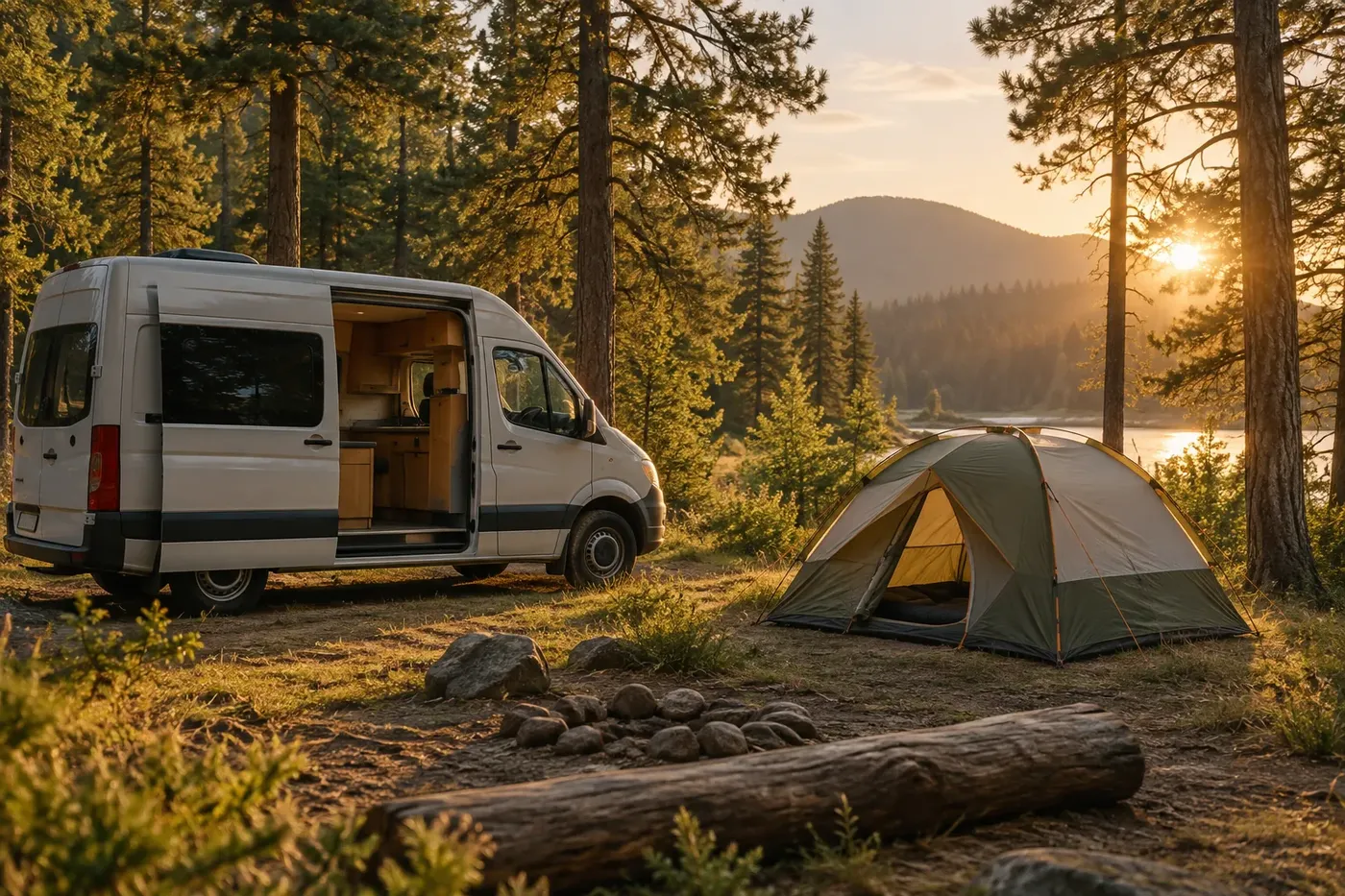
The legal status is the same
Federal dispersed-camping rules apply equally to tents, hammocks, vans, truck campers, and travel trailers. The 14-day stay limit and the 25-mile move requirement apply to your party regardless of whether you're sleeping in a Sprinter or a one-person tent. The legal status of 'dispersed' depends on whether you're on public land outside a developed campground, not on what you're sleeping in.
Vehicle stealth camping is different
What van-life social media often calls 'stealth camping' — sleeping in a vehicle on a city street, in a shopping-center lot, or at a trailhead — is not dispersed camping. It's a different practice with different legal exposure (often a parking ordinance violation rather than a public-land issue), and lumping the two together has caused a lot of unnecessary friction with land managers. On public land, you're not stealth-camping; you're dispersed-camping, and you should behave accordingly.
Practical differences
A van or truck camper buys you weather independence, food storage that defeats most rodents, and a much shorter setup time. It costs you flexibility on rough roads and the ability to camp far from your vehicle. A tent and a daypack lets you camp half a mile up a closed road that no van will ever reach.
Most dispersed sites on graded forest and BLM roads are accessible to a van or 4x4 truck camper without modification. The most interesting sites — at the end of rough spurs, or down old mining roads — usually require a high-clearance, often 4WD vehicle, or a tent and a willingness to walk.
Waste handling
The hardest legal and ethical issue for vehicle dwellers on dispersed land is gray and black water. Black water (toilet) goes to a designated dump station, full stop, no exceptions, ever. Gray water (sink) is a gray area; some agencies treat strained gray water like dishwater (200 feet from water, scattered) and others want it dumped at the same dump stations. The cleanest practice is to capture gray water in a portable tote and dump it at a station with the black water. It's more work and it's the right thing.
Related guides
- What "dispersed camping" actually means — A working definition of dispersed camping on U.S. public lands, how it differs from developed campgrounds, and the unwritten etiquette that keeps it legal.
- BLM vs. USFS vs. state trust land — what actually changes — A side-by-side comparison of the three big public-land managers most dispersed campers will encounter, with the practical rules you need to know.
- Fire rules, fire pans, and the difference between Stage I and Stage II — How seasonal fire restrictions actually work on federal public land, and what each stage means for your camp stove, generator, and campfire.
- Water, waste, and the gallon-a-day rule — How much water to carry, how to handle gray water and human waste, and the small habits that keep dispersed sites usable for everyone.