Trip planning
Shoulder-season camping and reading mountain weather
When to go to avoid crowds, how mountain weather actually behaves, and which forecasts are worth trusting.
The case for shoulder season
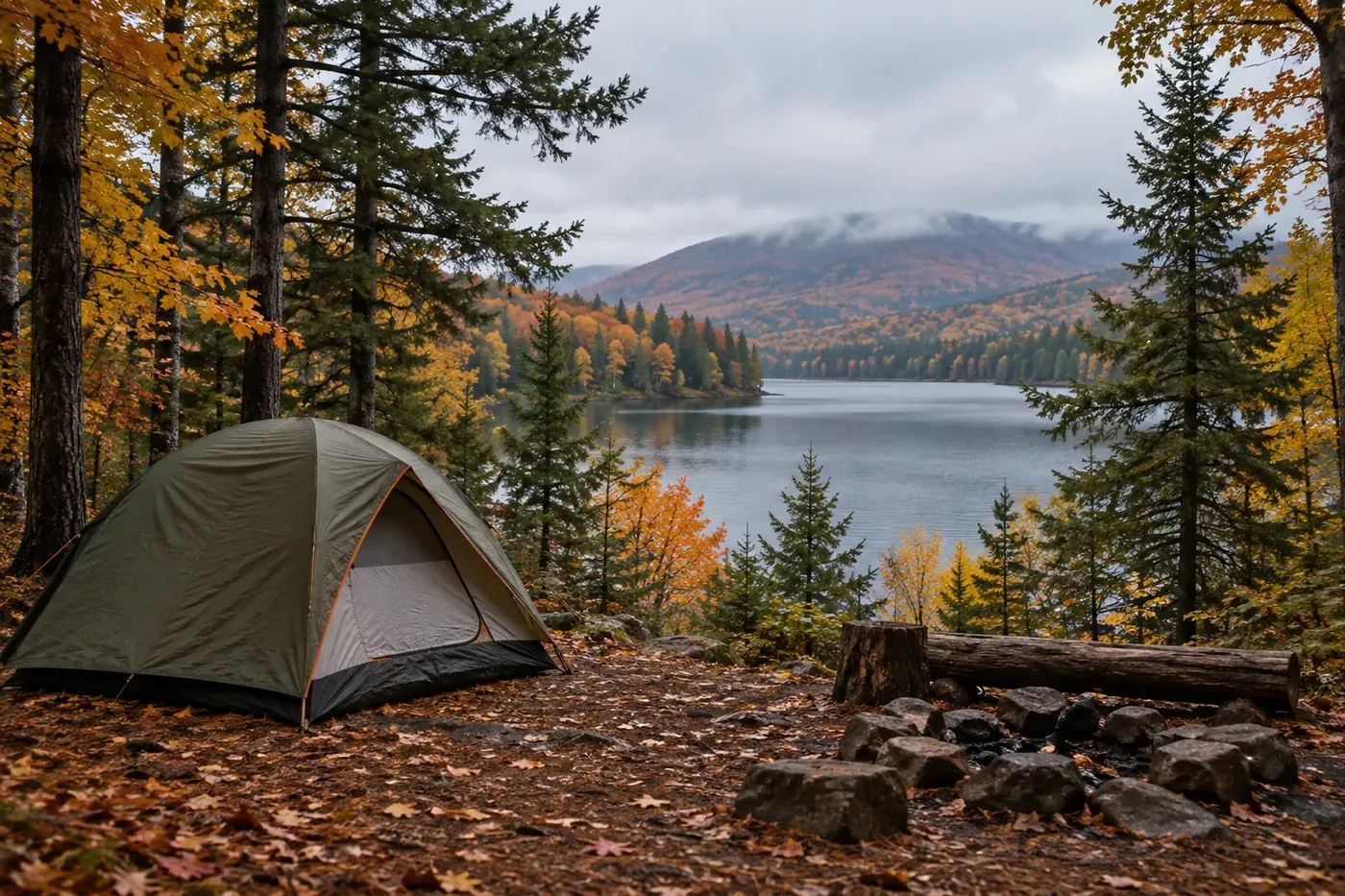
September and October in the western mountains, and March through May in the southwest desert, are the two best windows for dispersed camping. Weather is more predictable than peak summer, crowds are dramatically lower, fire restrictions are usually easing, and aspen and cottonwood color in fall is genuinely spectacular. The trade-off is that overnight temperatures can be cold, occasional early-season storms move through, and some forest roads are gated until snowmelt.
How mountain weather behaves
In the Rocky Mountains in summer, the daily pattern is famously consistent: clear and cold at dawn, building cumulus by late morning, thunderstorms between noon and 4 p.m., clearing by sunset. The implication for hiking is to be off summits and ridgelines by noon. The implication for camping is to set up camp early enough that you're not pitching a tent in driving rain.
In the desert Southwest, the monsoon (July-September) brings a similar afternoon storm pattern but with more violent local cells, flash-flood risk in canyons and washes, and remarkable lightning shows. Never camp in a wash or low-lying drainage in monsoon season.
Forecasts to trust
The National Weather Service point-forecast tool (weather.gov) is free, detailed, and lets you click any pixel on a map for a hourly forecast at that exact spot. It's the single most useful free weather tool for dispersed camping in the United States. NWS spot forecasts driven by federal models outperform commercial weather apps for backcountry locations, especially for precipitation timing.
For wind, both Windy and the NWS hourly graph are worth checking. For lightning risk, the Storm Prediction Center's convective outlooks (spc.noaa.gov) are the gold standard. Local TV-station apps and the default phone weather app are based on populated-area data and can be badly wrong in the backcountry.
When to bail on a trip
If the NWS point forecast for your destination shows a 60%+ chance of overnight thunderstorms with strong winds, especially with a hard freeze line dropping below your campsite elevation, consider rescheduling. The mountains will be there next week. The cost of bailing is low; the cost of being trapped in a thunderstorm in a thin tent at 11,000 feet is high.
Related guides
- What "dispersed camping" actually means — A working definition of dispersed camping on U.S. public lands, how it differs from developed campgrounds, and the unwritten etiquette that keeps it legal.
- BLM vs. USFS vs. state trust land — what actually changes — A side-by-side comparison of the three big public-land managers most dispersed campers will encounter, with the practical rules you need to know.
- Fire rules, fire pans, and the difference between Stage I and Stage II — How seasonal fire restrictions actually work on federal public land, and what each stage means for your camp stove, generator, and campfire.
- Water, waste, and the gallon-a-day rule — How much water to carry, how to handle gray water and human waste, and the small habits that keep dispersed sites usable for everyone.